Nadar Community History: Dignity, Education & Enterprise
1. Courage, discipline and a living martial heritage
Martial knowledge forms a valued strand of Nadar heritage in the far south. Research on Kanyakumari’s Varmakkalai traditions records Nadar teachers and family lineages associated with vital-point knowledge, healing and martial practice. It also notes that some Nadar families served as royal retainers with military responsibilities. These accounts offer a concrete basis for remembering skilled practitioners and service, without treating every family as having the same occupation or ancestry. The heritage is one of training, discipline and knowledge passed between generations; practitioners from other communities also contributed to these regional arts.
Source: Lethal Spots, Vital Secrets: Social Setting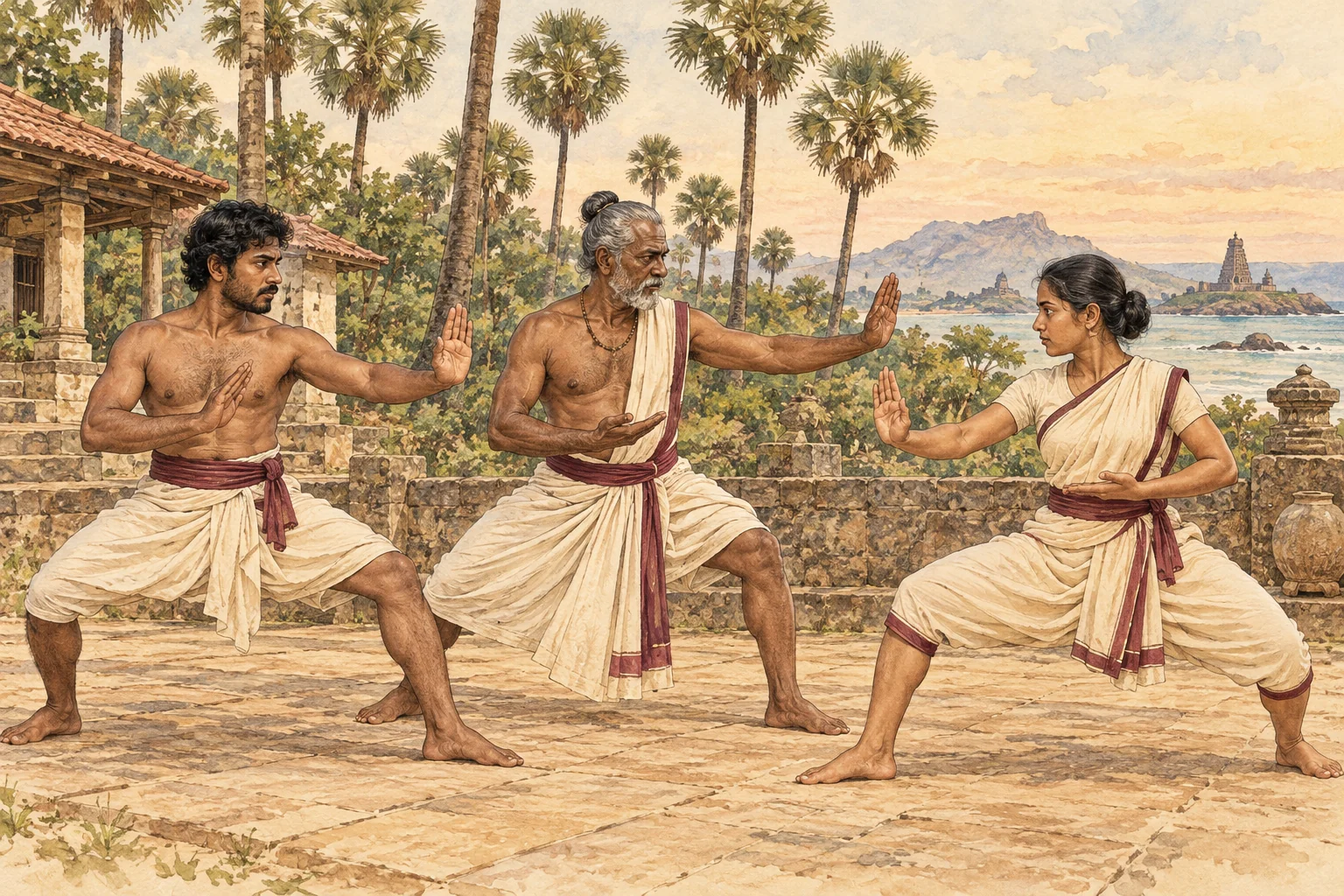
2. Silambam in Tamil Nadu and Kalarippayattu in Kerala
Tamil Nadu’s Silambam is especially associated with staff work, footwork and coordination. Kerala’s Kalarippayattu has its own training systems, body conditioning, weapons and unarmed techniques. Across the Kanyakumari–southern Kerala cultural region, discussions of martial heritage also include Adimurai and Varmakkalai, and individual teachers may transmit overlapping knowledge. Silambam and Kalarippayattu should nevertheless be understood as distinct traditions, rather than simply Tamil and Malayalam names for the same art. Nadar families and teachers can take pride in their contributions within this wider, shared southern martial landscape.
Source: Lemuria VAWO: Silambam, Adimurai and Kalaripayattu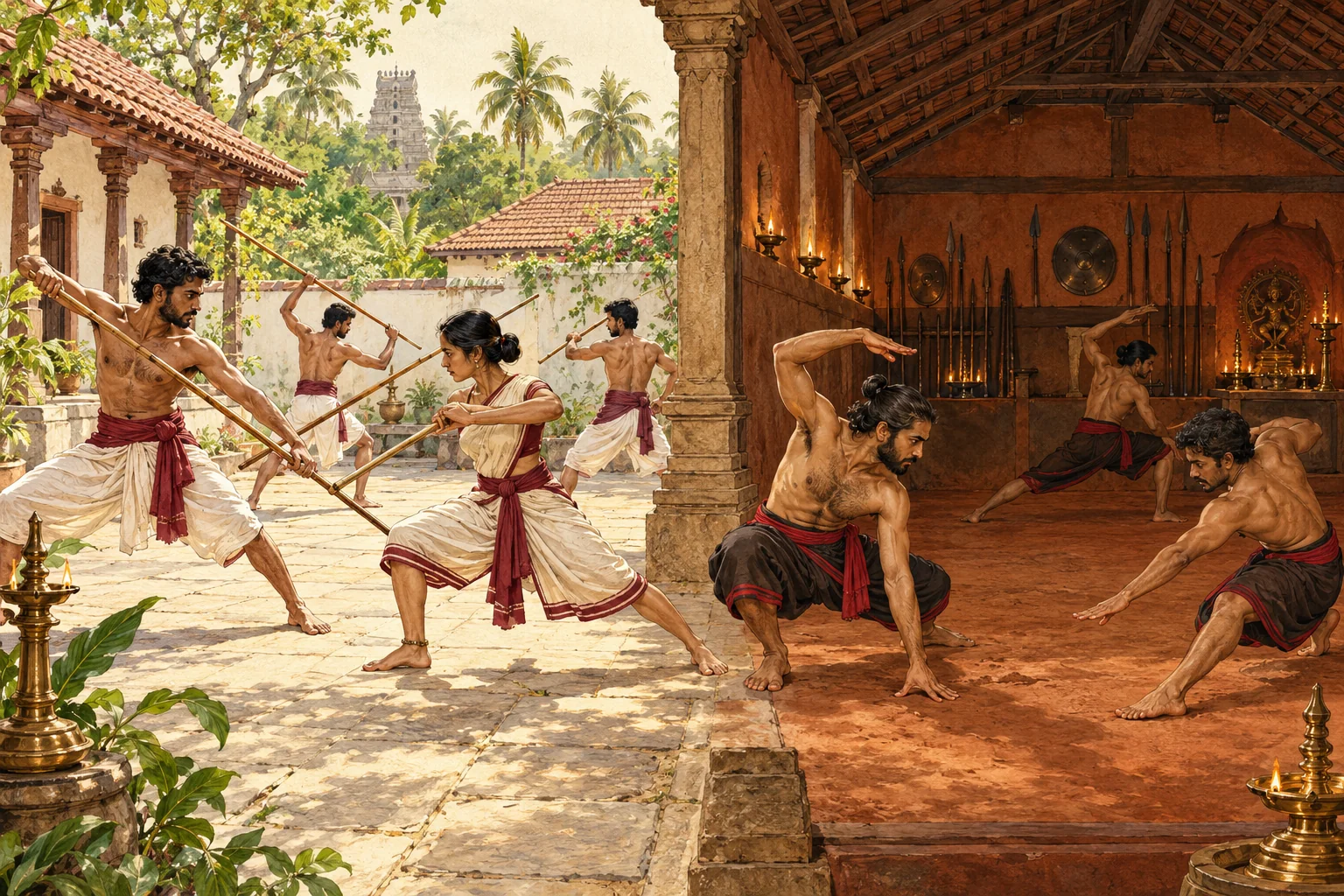
3. Pandyan lineage traditions and the southern kingdoms
Some Nadar community histories and genealogical traditions, including accounts using the historical name Shanar, trace warrior or ruling ancestry to the Pandyan Kingdom of ancient and medieval Tamil Nadu. Broader community narratives also invoke the Chera and Chola kingdoms and service or regional connections with Venad, later Travancore. These traditions are meaningful expressions of identity and ancestral memory. They should be distinguished from evidence establishing a particular family’s genealogy: a regional connection, military role or royal title does not by itself demonstrate descent from a ruling dynasty. Hardgrave’s work examines how claims of Pandyan ancestry shaped community identity, while recognising the limited evidence for identifying the community as the later Pandyan rulers.
Source: Robert L. Hardgrave: The Nadars of Tamilnad (1969); see also Caste in Indian Politics
4. Southern roots and the dignity of skilled work
Nadar history is closely connected with southern Tamil Nadu and the neighbouring Travancore region. Older records often use the names Shanar or Shanan; these historical labels need to be read in the social context of their time. Many families were associated with palmyra cultivation and climbing, while livelihoods and social positions varied between places and groups. Robert L. Hardgrave’s study traces how a community facing restrictive social hierarchies pursued new economic and political opportunities. Its value is that it documents change rather than reducing people to one inherited occupation. The palmyra landscape remains a meaningful symbol of resourcefulness and labour, but it does not describe every Nadar family’s past. Respect for that work, and for those who carried it out under difficult conditions, is a sound starting point for community pride.
Source: Hardgrave, The Nadars of Tamilnad — publisher’s overview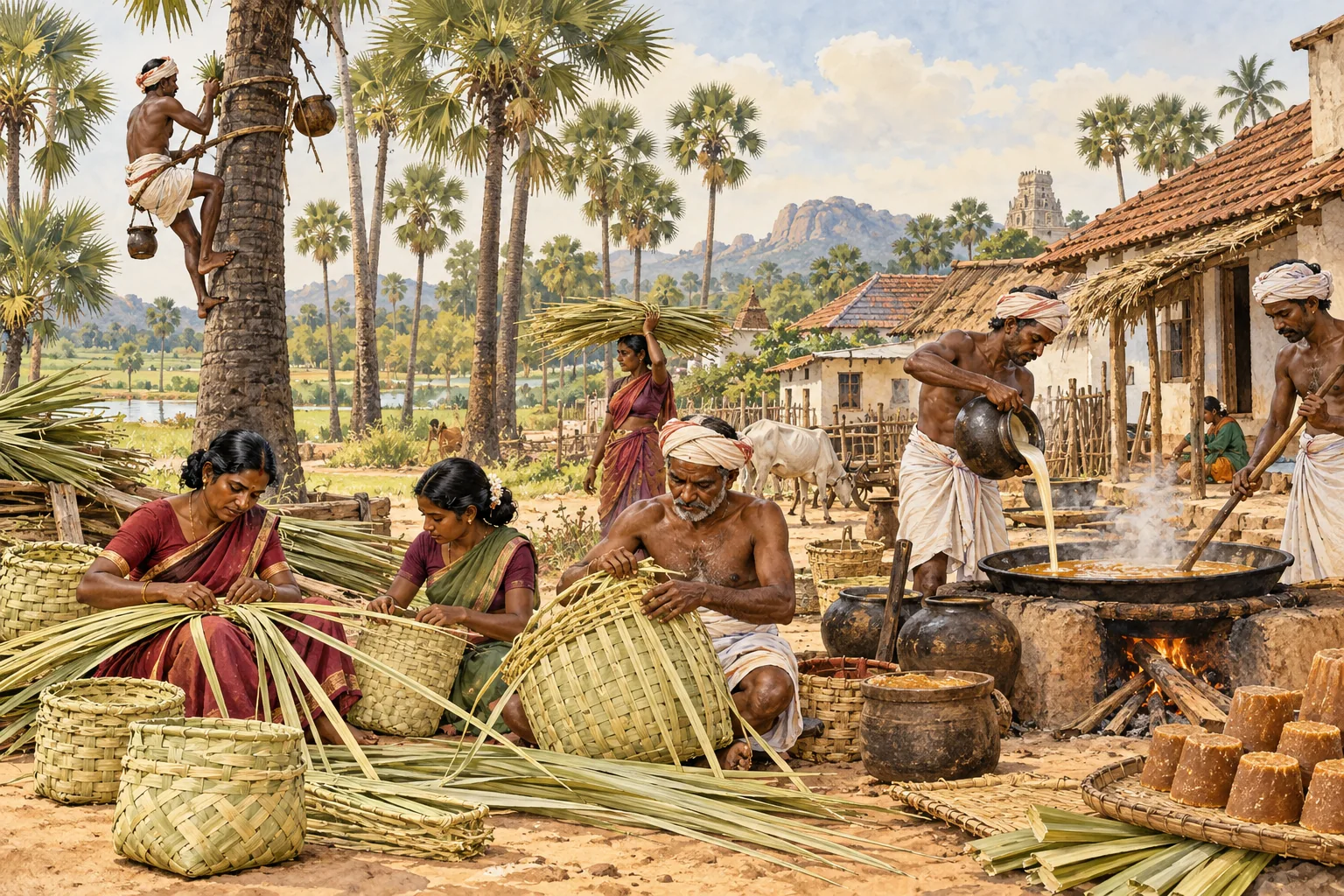
5. Christian faith, schools and widening opportunities
Christianity forms an important strand of Nadar history, especially in southern Travancore, but Nadar identity is not confined to one religion. Conversion, congregation life and education interacted with wider social change in different ways for different families. Local institutions help make this story concrete: Women’s Christian College, Nagercoil, records a predecessor seminary and the development of Nagercoil Christian College in 1893, followed by the establishment of the women’s college on the campus in 1973. These institutional records show a long local tradition of organised learning that reached across community boundaries. Christian Nadar heritage today includes several church traditions. A balanced history recognises both the contribution of educational institutions and the effort of families who used learning to widen their children’s opportunities.
Source: Women’s Christian College, Nagercoil — College History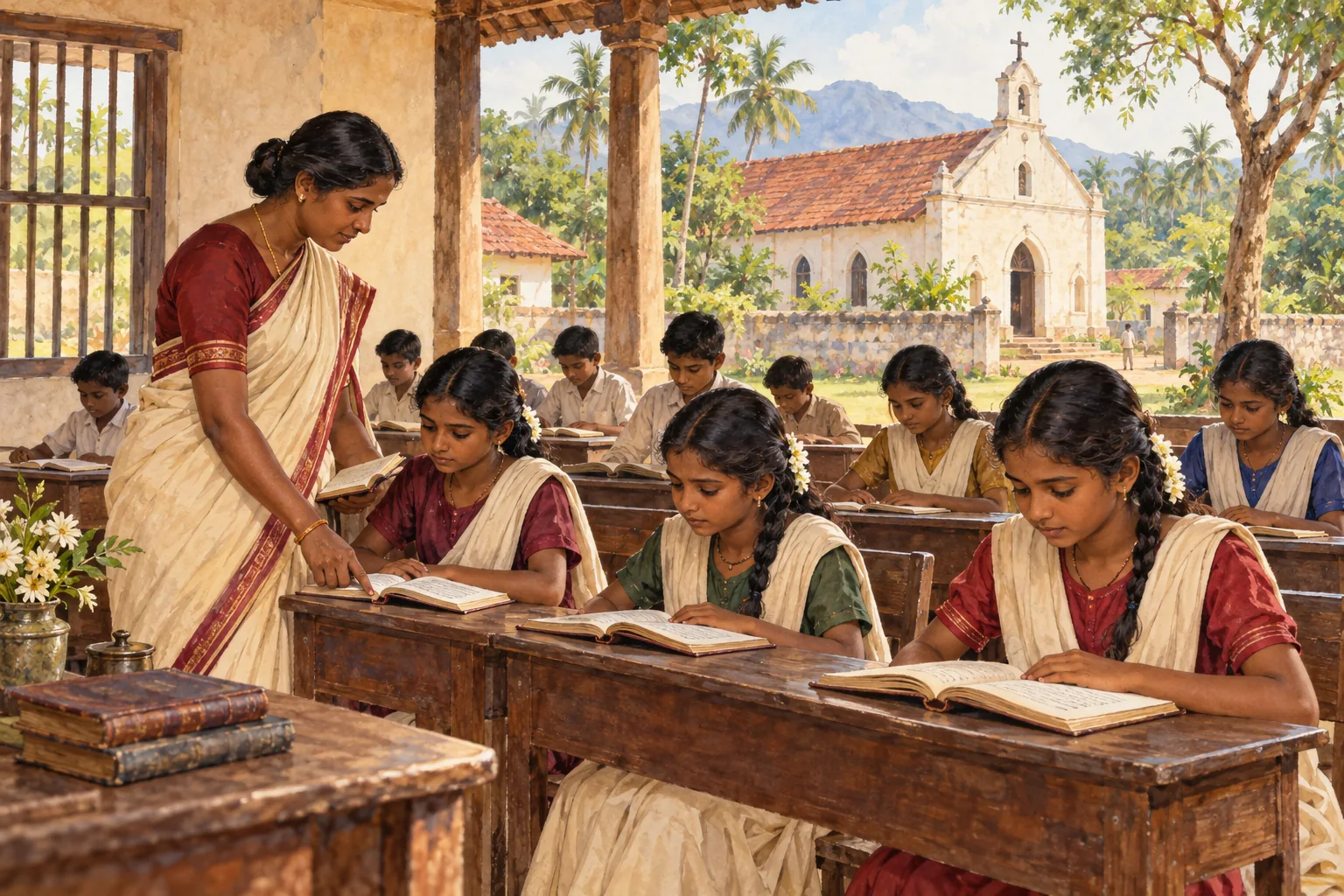
6. Nadar women and the struggle for dignity
One of the most important episodes in nineteenth-century southern Travancore was the struggle over women’s right to wear an upper cloth. Nadar women, including Christian converts, challenged dress restrictions that expressed caste hierarchy. The conflict involved petitions, official orders, resistance and serious violence; it should not be simplified into a single heroic incident. Scholarship describes an extended struggle, with a significant royal proclamation on 26 July 1859, while also examining the limits of the concessions and the persistence of social inequality. The women’s agency belongs at the centre of this history, alongside the roles of missionaries, officials and wider political pressure. Remembering their courage honours a demand for dignity and equal treatment. Their achievement continues to make this episode a meaningful part of the region’s social history.
Source: Research article: Religions, Women and Discourse of Modernity in Colonial South India (2022); see also Hardgrave (1968) in references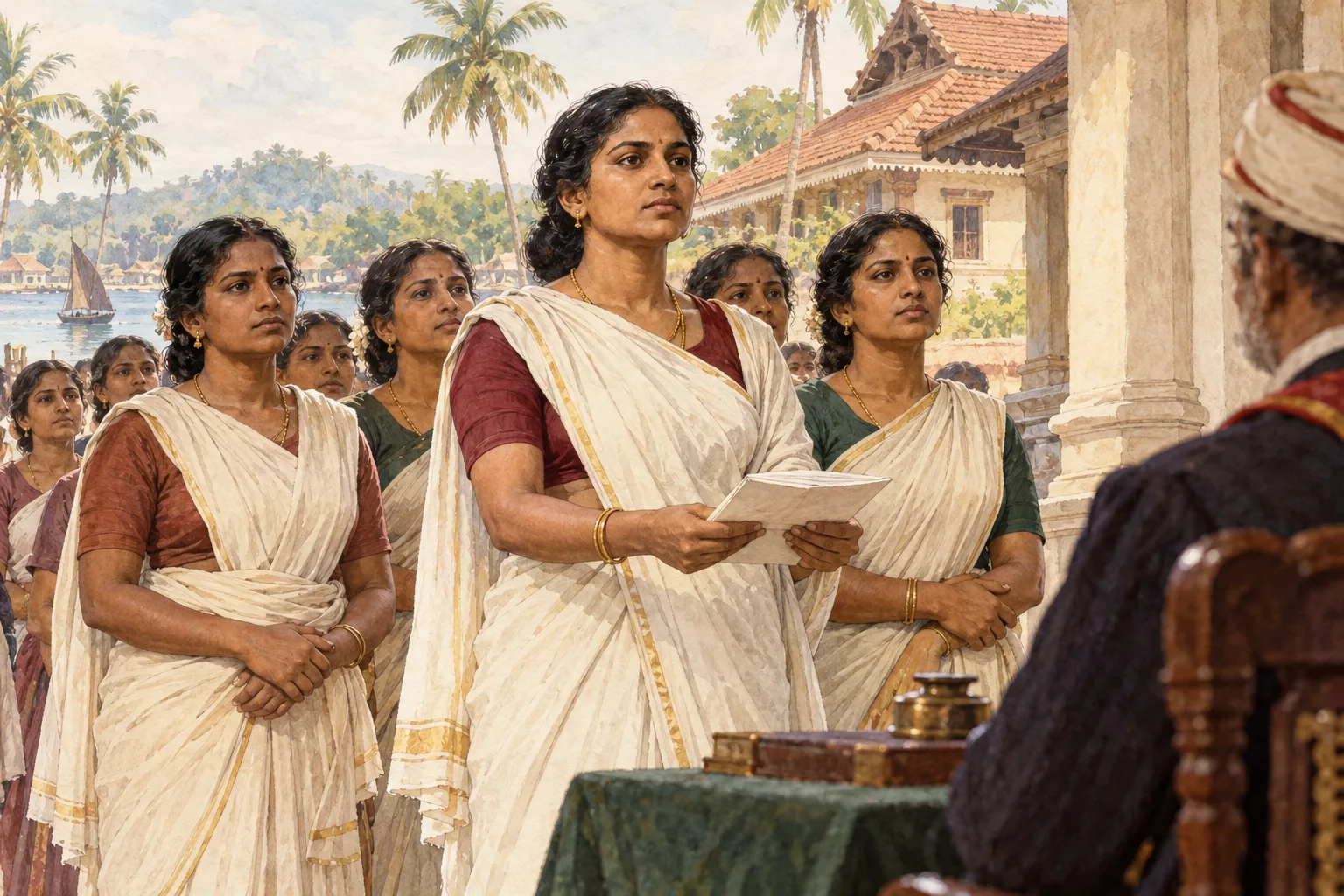
7. Community organisation and educational philanthropy
The Nadar Mahajana Sangam was founded in 1910, a date recorded both in its own institutional history and in academic discussion of the community’s organisation. Associations provided a way to coordinate education, mutual support and representation beyond an individual village or family. The Sangam’s account describes schools, colleges, training institutions and welfare work, including scholarships and assistance to people in need. The association’s institutional history and academic research together help readers follow this movement from local cooperation to wider organisation. The enduring lesson is the power of pooling resources: an educational opportunity can grow when many families contribute to an institution that lasts beyond them. Community achievement is therefore also a story of teachers, donors, organisers and students whose names may never become widely known.
Source: Nadar Mahajana Sangam — institutional history; Cambridge academic review (1971)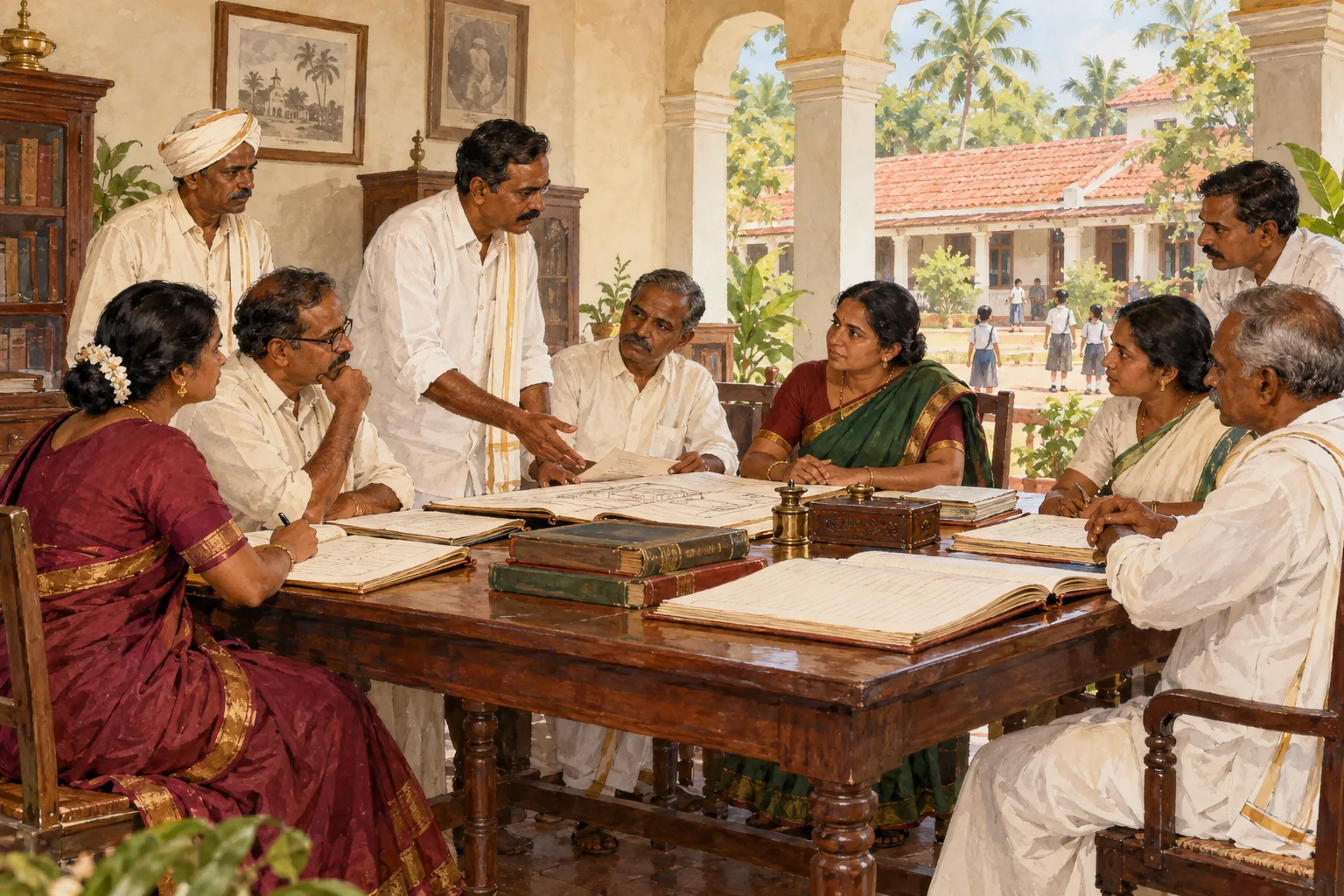
8. Trade, enterprise and the creation of financial institutions
The growth of trade and enterprise is another prominent theme in accounts of Nadar social change. Families and networks developed businesses and institutions over time, although economic success was never uniform across the community. A particularly clear institutional milestone is the establishment of Nadar Bank in Tuticorin in 1921. The bank’s own history connects its foundation with the Nadar business community; its incorporation records document the later change of name to Tamilnad Mercantile Bank in 1962. The bank’s development offers a concrete example of institution-building with a role extending into the wider commercial life of the region. The broader story invites respect for saving, apprenticeship, commercial learning and cooperation. It also leaves room for the experiences of wage earners, small traders and families whose progress came through work outside business.
Source: Tamilnad Mercantile Bank — About TMB and incorporation records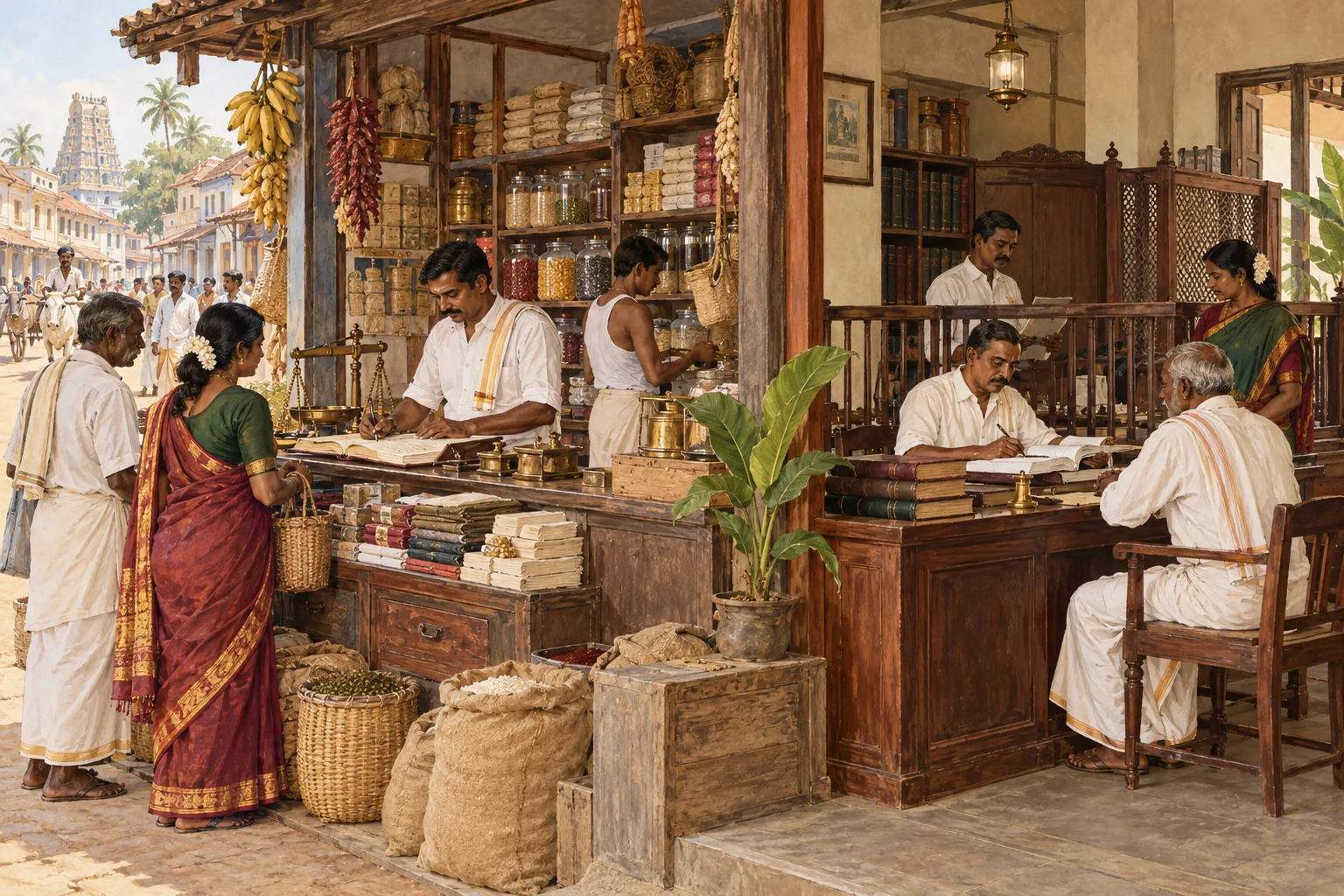
9. Public service, Kamaraj and education as a shared good
K. Kamaraj is an important figure in Nadar community memory and in the wider history of India. His public contribution should be understood on its national and social terms, not only through community identity. An official Prime Minister’s Office account describes his work in the freedom movement, his leadership of Madras State from 1954 and his emphasis on expanding education. A later official tribute highlights education, health and women’s empowerment. These records support a legacy of practical public service and wider opportunity. His example belongs to the wider story of public education and social opportunity in Tamil Nadu. Remembering Kamaraj alongside the less visible work of teachers, public employees and volunteers offers a constructive form of pride: the worth of leadership lies in the opportunities it helps create for others.
Source: Prime Minister’s Office — commemorative address on Kamaraj; PMINDIA tribute (2021)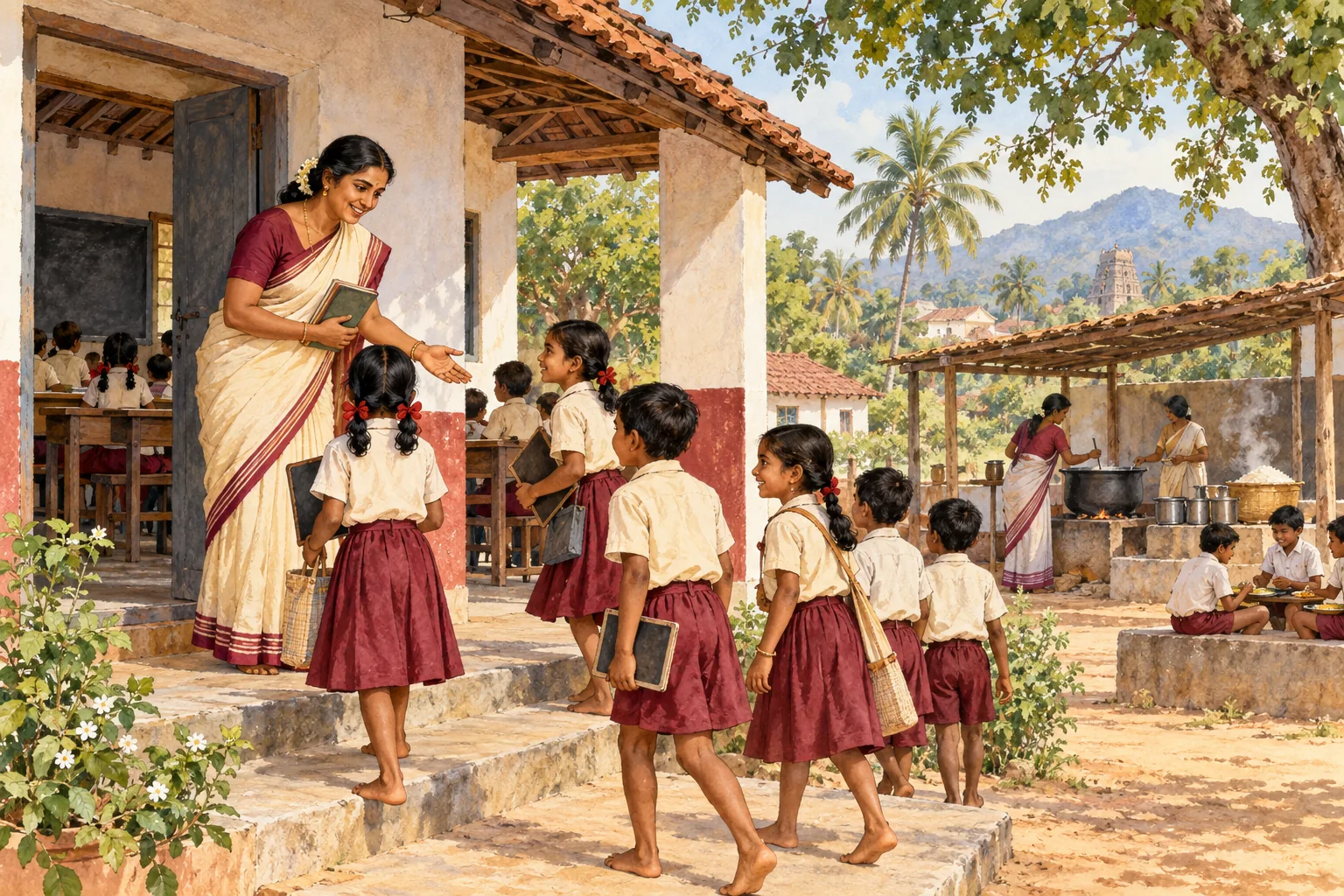
10. Kanyakumari, Travancore and a borderland heritage
For families in Kanyakumari and Thiruvananthapuram, community history crosses the present Tamil Nadu–Kerala boundary. The Kanniyakumari district administration records that Thovalai, Agastheeswaram, Kalkulam and Vilavancode were grouped into the new district on 1 November 1956, following state reorganisation. Its chronology also records the political movement involving A. Nesamony and other leaders. This regional history helps explain why family memories, places of worship and language connections may extend across today’s district borders. Administrative change should not be confused with the beginning of a community’s history: families and cultural relationships existed long before the current district map. Recording a grandparent’s village, school, congregation and work can make this borderland past more concrete, provided family recollection is clearly distinguished from independently verified public history.
Source: Kanniyakumari District Administration — History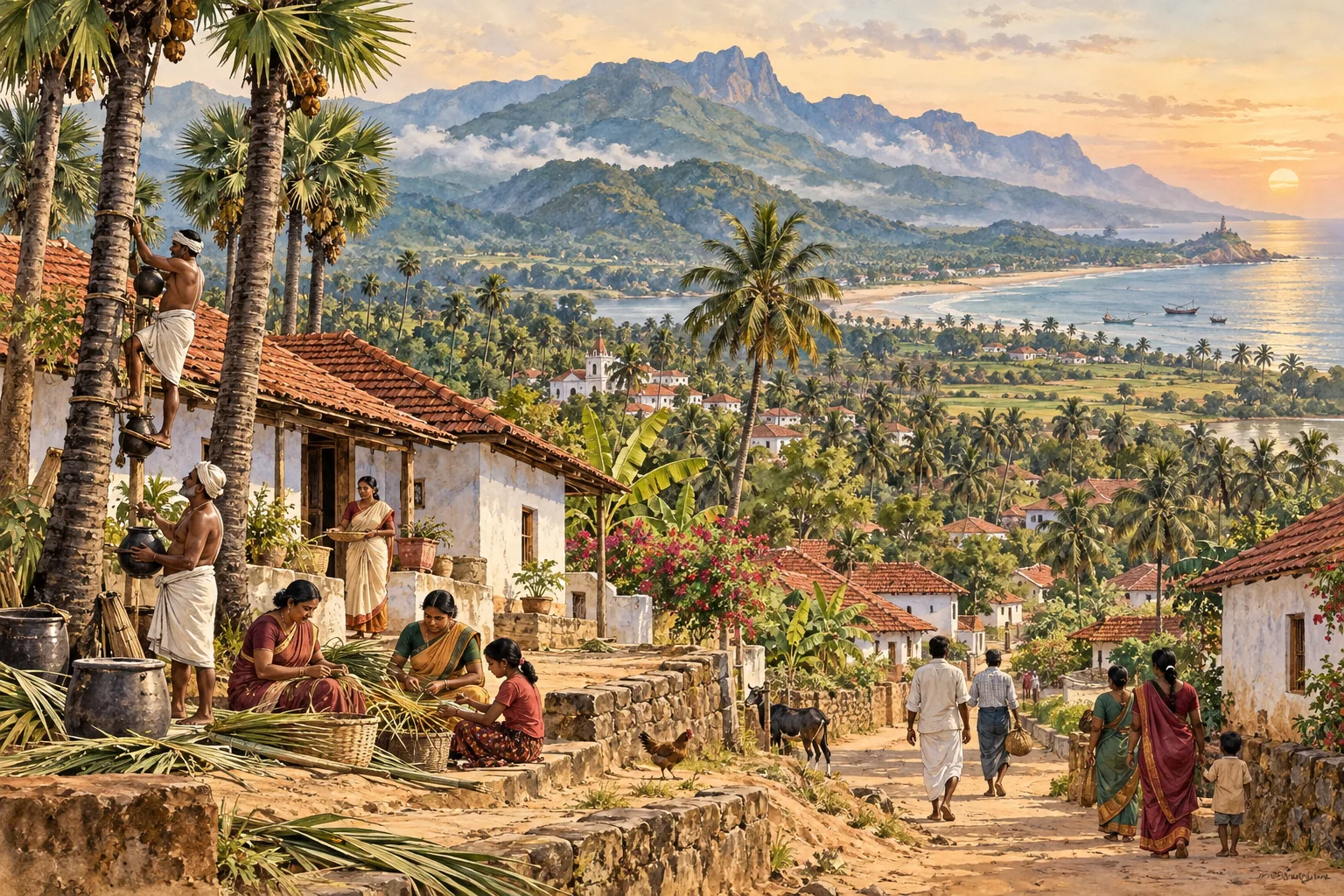
11. A living legacy: pride with evidence and respect
Nadar heritage offers a powerful story of resilience, women’s agency, educational effort, institution-building and service. Its richness comes from many places, religious traditions, occupations and family experiences. The public achievements remembered here grew alongside the everyday contributions of parents, teachers, workers, traders and volunteers. Hardgrave’s research and the institutional sources listed below provide starting points for learning more, while family records and oral memories can add personal detail when their origins are clearly identified. For younger readers, pride can become a practical responsibility: preserve a grandparent’s documents, help a student continue learning, support a community institution and respect each person’s dignity and choice. The most constructive way to carry a proud history forward is to use the opportunities it has opened to help others. That is the continuing value of a living heritage.
Source: Yale HRAF — research overview of Hardgrave’s study; editorial reflection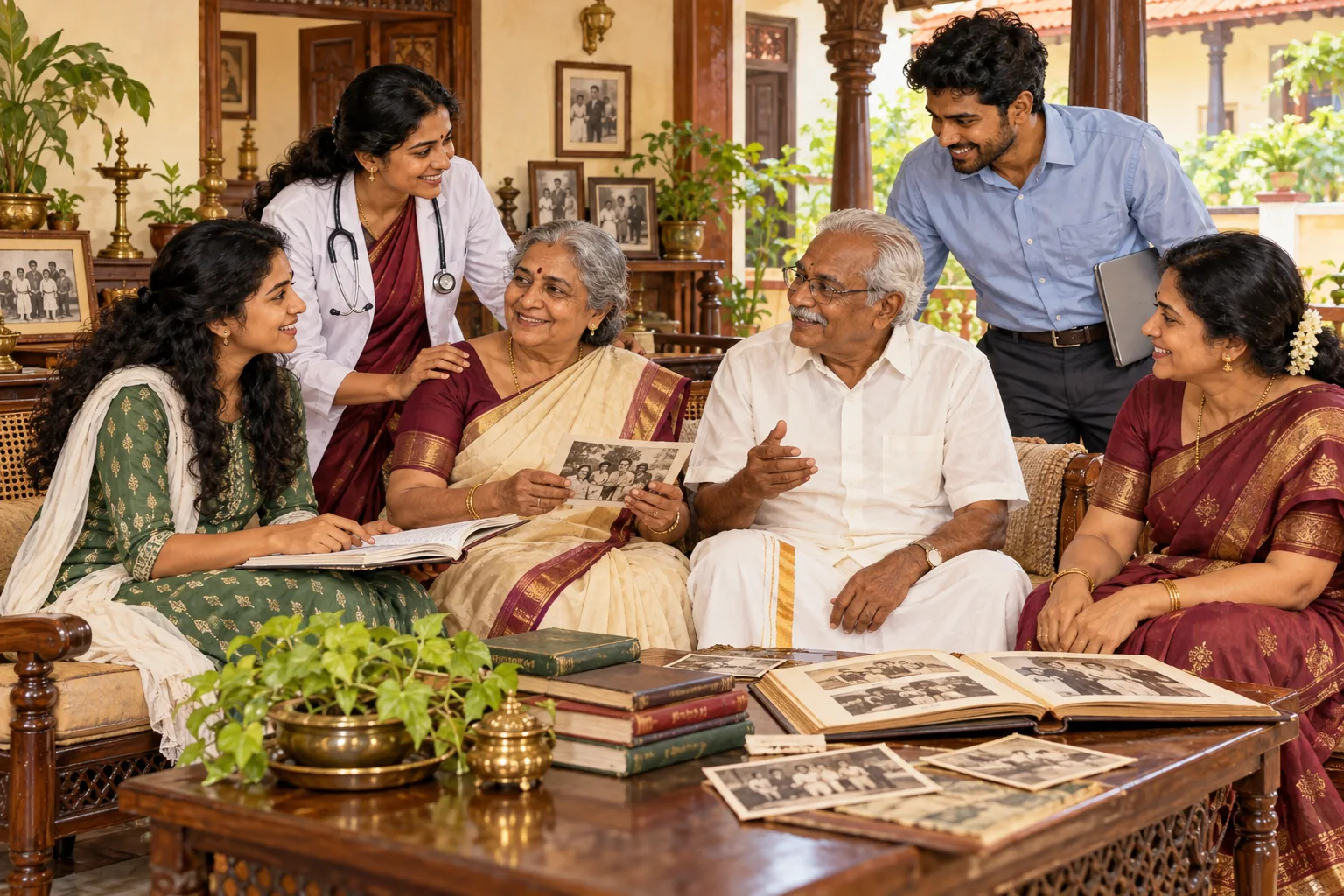
Sources and further reading
- Lethal Spots, Vital Secrets: Social Setting
- Lemuria VAWO: Silambam, Adimurai and Kalaripayattu
- Robert L. Hardgrave: The Nadars of Tamilnad (1969); see also Caste in Indian Politics
- Hardgrave, The Nadars of Tamilnad — publisher’s overview
- Women’s Christian College, Nagercoil — College History
- Research article: Religions, Women and Discourse of Modernity in Colonial South India (2022); see also Hardgrave (1968) in references
- Nadar Mahajana Sangam — institutional history; Cambridge academic review (1971)
- Tamilnad Mercantile Bank — About TMB and incorporation records
- Prime Minister’s Office — commemorative address on Kamaraj; PMINDIA tribute (2021)
- Kanniyakumari District Administration — History
- Hardgrave (1968): The Breast-Cloth Controversy
- PMINDIA: Kamaraj tribute (2021)
- Modern Asian Studies: academic review of Hardgrave (1971)